
How to Get Ramsey County Court Records
Begin with Minnesota Court Records Online, or MCRO. The Case Details view lists the court-assigned number and the case title. It also shows events, plus links to any documents the public can open. A full case number gives the Records Office a much cleaner starting point. A vague request helps no one. When a public item carries a View Document link, MCRO lets you download it. There is no document-access charge for that. Still, a search result is not a certified court record.
If the item you need never shows up remotely, try a public terminal. Terminals sit inside a Ramsey courthouse. You can also contact the Ramsey County District Court Records Office by phone, mail, or in person. Payment comes first. The official copy-request instructions accept check or money order by mail. They take credit or debit by phone. In person, cash, check, money order, credit, or debit all work.
- Find the case in MCRO or at a courthouse terminal and note the full case number, title, and requested event or document.
- Try the public View Document link when one is offered; use Document Search only with a complete case number.
- Choose a plain, certified, exemplified, transcript, or case-management report request before contacting Ramsey Records.
- Request the identified Ramsey court record by mail, phone, or at the counter, then use the payment method the office allows for that channel.
- Ask about the formal access route if the item is nonpublic or sealed instead of treating an access limit as proof that no record exists.
Note: Want an official record from another Minnesota county? That request belongs with that county's district court, not Ramsey Records.
Ramsey Court Records in Room 72
The Ramsey court-records office handles the local counter work. That means copies, historical files, closed cases, and questions across every case type. It sits inside the unified Ramsey County District Court, Second Judicial District system. The Judicial Branch lists Heather Kendall as Court Administrator. Day-to-day record requests flow through the Records Office and its division clerks.
Ramsey County District Court Records Office
Room 72, Main Courthouse
15 W Kellogg Blvd
St. Paul, MN 55102
(651) 266-8237
Monday–Friday, 8:00 a.m.–4:30 p.m.
Courthouse terminals run the same statewide public-access system. That helps when an older file or public item is not open to remote users. For transcripts, Records can hand over one that was actually filed in the case. A transcript never filed with the court goes through the court reporter instead. Administrative Services handles that at (651) 266-8302. Have the file number and hearing date ready.
Types of Ramsey County Court Records
No single form makes up a Ramsey court record. MCRO gives a public overview and the Register of Actions. The full case file may also hold pleadings, orders, notices, financial entries, and linked public documents. What you can see depends on the case type. It also depends on the filing date and the Minnesota access rule in play. The custodian can explain which forms exist. No request turns a nonpublic item into a public one.
- Register of Actions: the chronological court index of filings, proceedings, hearings, and case events.
- Filed documents: public complaints, motions, orders, notices, and images when access permits.
- Judgment materials: monetary judgment details and satisfactions where the court has docketed them.
- Certified or exemplified copies: authenticated court copies for a specific filed Ramsey document.
- Transcripts and reports: spoken-proceeding records or court-generated reports that follow separate request rules.
Family, juvenile, civil-commitment, domestic-abuse, harassment, and similar sensitive case types lack the same remote document access as ordinary civil or criminal matters. A category label alone never settles whether a filing is downloadable.
Ramsey Court Records and MCRO Dates
Filing dates drive what MCRO shows. Official guidance describes broad remote availability for public major and minor criminal and civil documents filed on or after July 1, 2015. Redaction and restrictions still apply. Public formal probate, guardianship, conservatorship, and trust documents from that date follow a similar general rule. Family cases get a narrower remote set. Court-prepared orders, judgments, opinions, and notices may appear. Party-filed motions and affidavits stay off MCRO.
Court-generated documents from July 1, 2005 through June 30, 2015 may also be available. That holds where the case type was remotely public. Older paper files might sit at the courthouse, transfer elsewhere, or be destroyed under a retention schedule. Ask at a terminal or through the Records Office. Do not treat the screen as the full archive. Search warrants and identifying no-contact or stay-away details stay out of MCRO's normal public document set.
Note: A missing download link can reflect an access rule, a filing date, or retention history. It does not mean an absent filing.
What a Ramsey County Court Record Contains
MCRO sorts the public case view into field groups. The overview may include the case number, title, type, filed date, location, judicial officer, status, citation number, related cases, upcoming hearings, and financials. Further panels cover parties and roles, charges, assignments, hearings, dispositions, and bond or bail activity. They also cover judgment details and case events in reverse order. One caution applies. A visible field does not promise that every document beneath it is public. Nor does it promise remote access.
| Case Number | The court-assigned identifier, such as 62-CV-26-00000, used to route a Ramsey case and request a specific file. |
|---|---|
| Register of Actions | The chronological list of proceedings, filings, orders, hearings, and other case events. |
| Document Index Number | The identifier paired with an event or document link when a public electronic filing is available. |
| Hearings and Dispositions | Past or upcoming settings and the case outcome entries appropriate to that type of case. |
| Financial and Judgment Details | Amounts due, payments, credits, monetary awards, interest, or satisfaction information when collected by the system. |
The status field is not a disposition by itself. Read the latest relevant event, order, or disposition entry in context instead of treating one label as the whole file.
Ramsey Court Record Document Links
A Register of Actions proves something happened in the case, not what the pages say. The Case Events list runs newest first. Each line may carry an event name, a description, and a Document Index Number. When a public electronic filing exists, a View Document control appears beside it. No control, no copy at that spot. A docket entry and the filed document behind it are related. But they are separate things, so keep that distinction in mind.
Reading a case from home works differently under the Minnesota Rules of Public Access to Records of the Judicial Branch, Rule 8, which permits less remotely than it does at the courthouse. If a public item should be there but is not, work the steps in order: MCRO first, then a public-access terminal, then the Records Office or the right division. A missing link tells you nothing. Do not read one as a dismissal. It is not proof that a document was never filed. It is not proof that a court record is complete either.
Certified Copies and Fees
Know which copy you are getting. A plain copy comes with nothing to vouch for it. A certified copy carries the Ramsey clerk's signature and seal process. An exemplified copy adds more. It carries the Court Administrator's signature plus a judge's. Ramsey Records certifies only documents filed in Ramsey County District Court. MCRO downloads and ordinary public copies are currently free. Certification is not. Service requests are not. Both follow the live district court fee schedule.
| Service | Fee captured |
|---|---|
| Uncertified copy, printout, scan, or screen print | $0 |
| Certified civil or criminal instrument | $14 |
| Exemplified plus certified copy | $28 |
| Case-management report, 1–50 pages | $5 per report |
| Judgment-search certificate | $5 per name |
The fee page lists these amounts. Its posted date of August 27, 2026, marks the schedule in effect. That page still controls. Categories and figures can change, so check it before you pay. Extra services are billed separately under the live schedule. These include scanning, fax, transcript judgment, filings, and larger reports.
Ramsey Court Records and Federal Files
Ramsey County District Court records live inside the Minnesota state-court system. A federal case does not. A civil or criminal matter based in St. Paul is its own file in the U.S. District Court for the District of Minnesota. A bankruptcy has a separate federal docket. A party with a Ramsey address still stays in the federal system. An MCRO search will not pull a federal record. The District of Minnesota's official site marks the line between the two court layers.
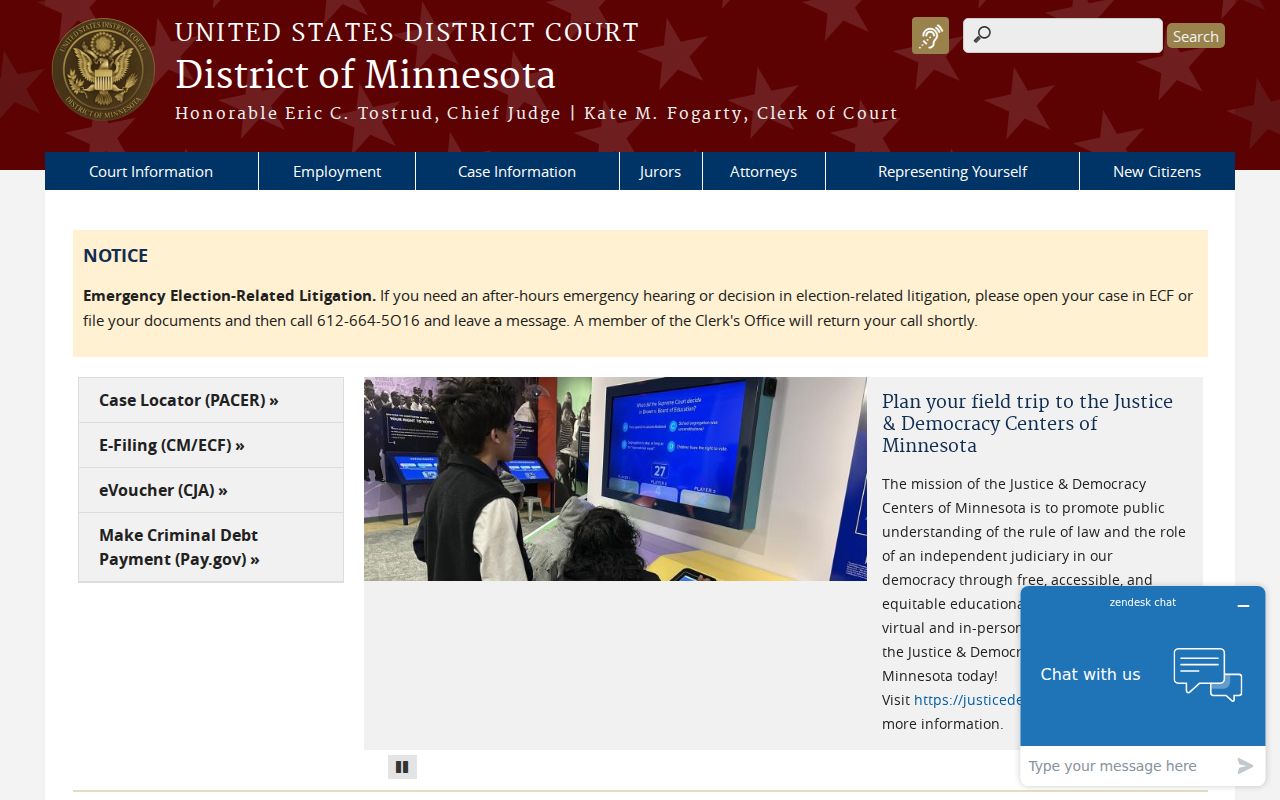
Match the court named on the case, not just the geography. A Ramsey name does not put a federal file in the state system. District of Minnesota CM/ECF is where federal filings and docket entries are made.
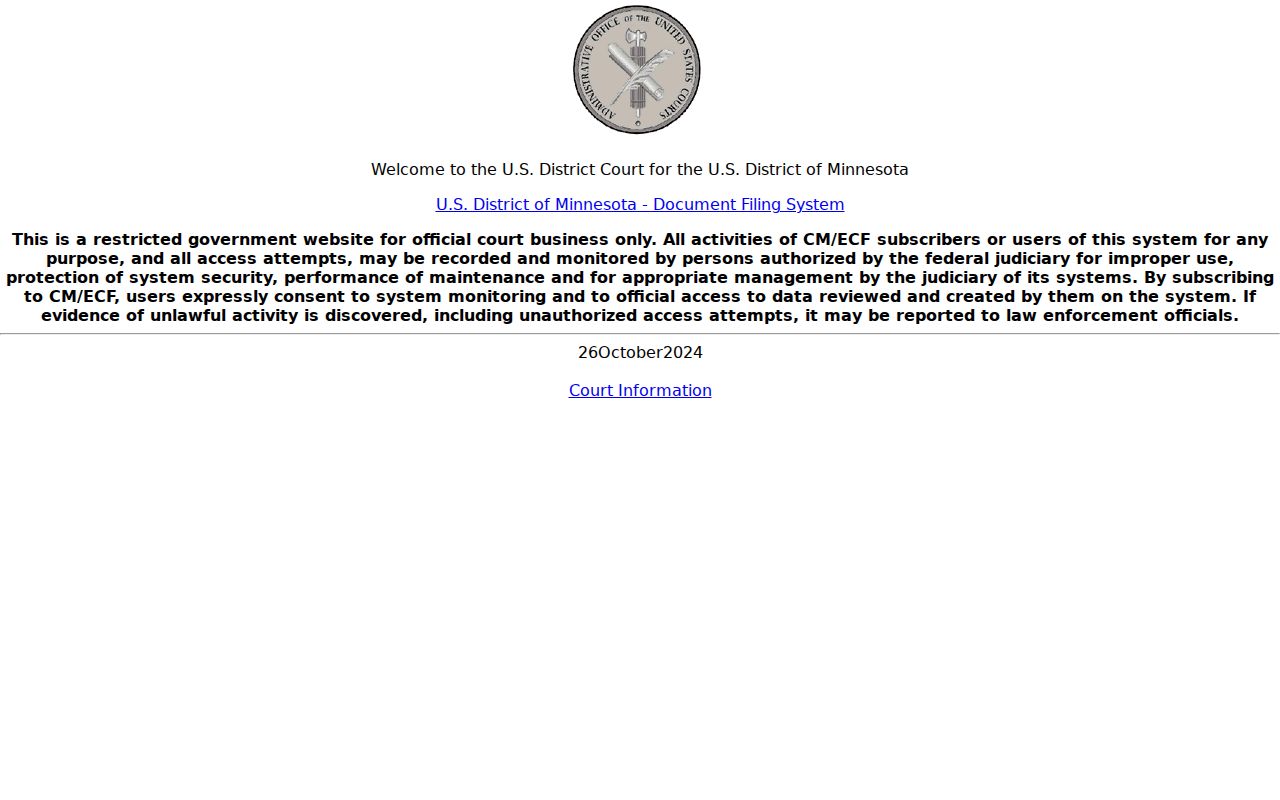
CM/ECF will not substitute for a Ramsey County District Court Register of Actions. PACER's official fee explanation spells out how federal electronic filing differs from public remote access.
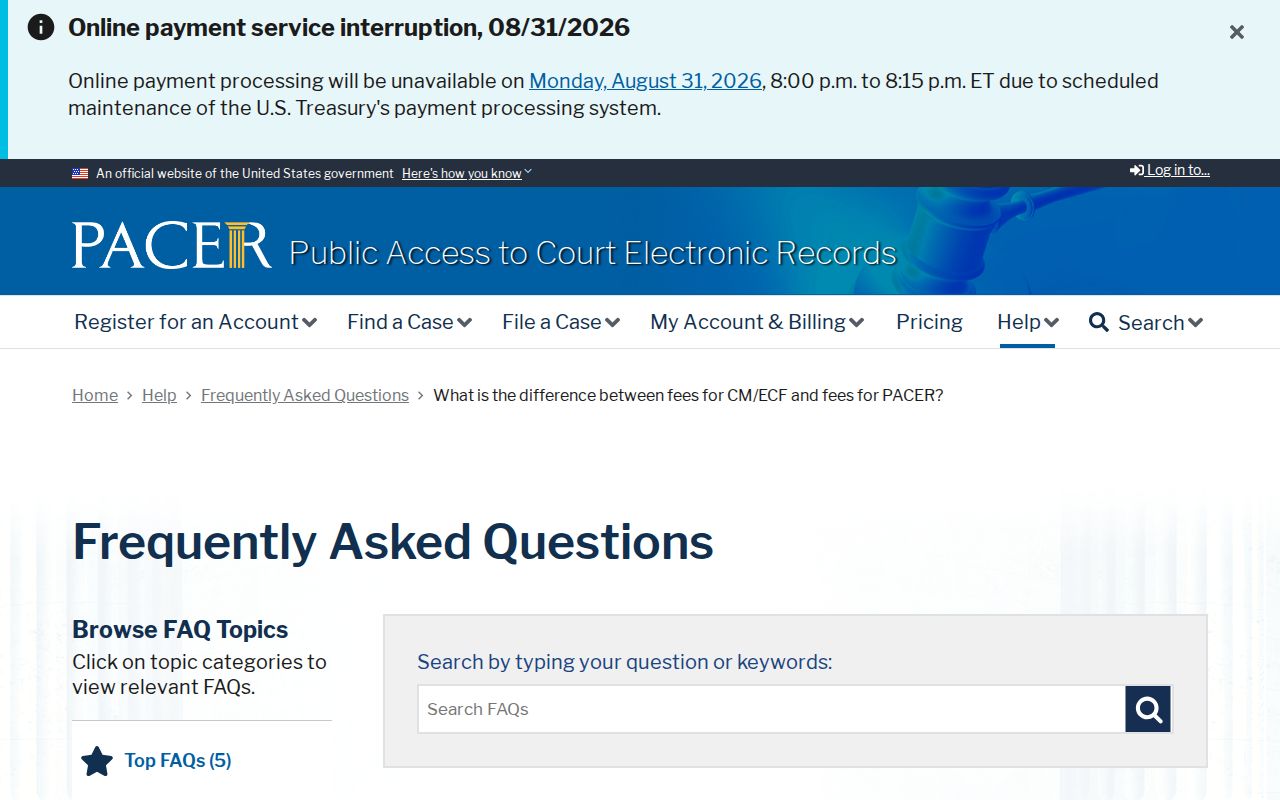
Those federal fees never govern certified Ramsey court records. The Minnesota fee schedule controls those.
Public Access and Sealed Records
Rule 8 opens most judicial records to public inspection and copying at the courthouse during regular hours. It sets narrower fields for remote access. Some material stays sealed or limited. Sealed, nonpublic, juvenile, civil-commitment, domestic-abuse, harassment, CHIPS, and other protected items may drop out of a public case search. Some appear only in part. That boundary is just a boundary. It says nothing about the person or how the case turned out.
Key Minnesota access rules:
Rule 8 governs public inspection, copying, and the difference between courthouse and remote judicial-record access.
Rule 4 protects specified personal information, protected locations, and certain nonpublic documents.
Minn. Stat. §13.90 directs judicial-data access questions to Supreme Court rules rather than the general government-data chapter.
Minn. Stat. ch. 609A supplies the expungement framework that can seal court records and limit disclosure.
For a restricted item, ask the court about the authorized process. Minnesota Rule 14.06 also requires electronic filers to flag confidential or sealed material. If a designation is wrong, the court can correct it.
Ramsey Court Records at State Archives
Older Ramsey court records sometimes take a different route. Ramsey's local guidance warns that some files are retained longer while paper records may be destroyed under the retention schedule. The Minnesota Historical Society State Archives holds Ramsey civil files from 1858 through 1902, file numbers 1 through 78,050. It also holds criminal files from before 1953. Its listed contact is (651) 259-3300.
Archives preserve and provide access. They do not promise that every old case is complete or searchable from home. Begin with the case number or whatever context the historical source gives you. Then ask whether the record sits with Ramsey Records or with State Archives. A historical file that is not online may still be retained elsewhere, destroyed under schedule, or closed off by the same access limits that apply to newer court records.